.jpeg)
Reviving the Gurukul System: The Antidote to Rote Learning in Modern India
Reviving the Gurukul System: The Antidote to Rote Learning in Modern India
Feb 10, 2026
In ancient India, the Gurukul system stood as a beacon of holistic education, where students lived with their guru in serene ashrams, absorbing knowledge through immersion, dialogue, and life practice. Unlike today's exam-centric model, which often traps students in endless rote memorization, Gurukul nurtured well-rounded individuals—thinkers, leaders, and ethical citizens. With India's National Education Policy (NEP) 2020 calling for experiential learning and value-based education, it's time to revisit Gurukul principles. This timeless system isn't outdated; it's the guiding force modern Indian education desperately needs to combat stress, skill gaps, and moral erosion.
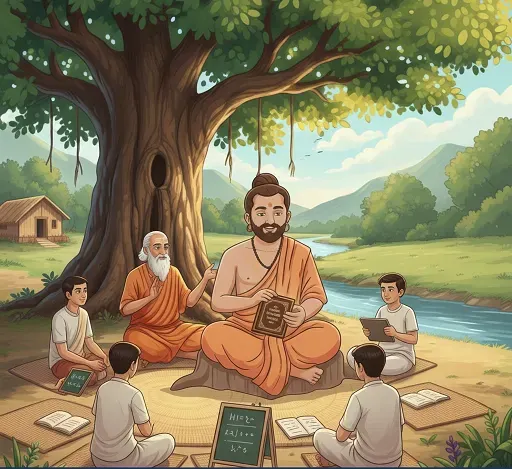
The Four Major Divisions of Gurukul (Ashramas)
Gurukul education was seamlessly woven into the four Ashramas, life's natural stages, ensuring progressive growth:
- Brahmacharya (Student Phase, 8–25 years): Focused on discipline, Vedic studies, physical training, and celibacy. Students served the guru, learning self-reliance through chores.
- Grihastha (Householder Stage): Emphasized family duties, ethics, and societal contributions, applying knowledge practically.
- Vanaprastha (Hermit Phase): A time for mentoring younger generations and spiritual reflection.
- Sannyasa (Renunciation): Ultimate wisdom-sharing and self-realization, free from worldly ties.
This structure made learning lifelong, not confined to classrooms.
Gurukul vs. Modern Indian Education: A Stark Contrast
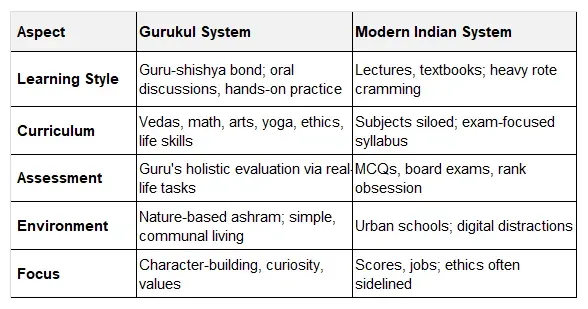
Gurukul produced luminaries like Chanakya and Aryabhata by fostering inquiry over parroting. Today's system, burdened by tuitions and cut-throat competition, leads to 26 student suicides daily (NCRB data), prioritizing marks over minds.
Why Gurukul is Essential Now
Modern education's rote obsession stifles creativity—students mug formulas without understanding applications. Gurukul countered this with personalized mentorship, where the guru tailored lessons to a shishya's aptitude. It built resilience through forest living and chores, unlike air-conditioned classrooms breeding dependency. In an India grappling with unemployment despite degrees, Gurukul's emphasis on practical skills (archery, farming, debate) and dharma (ethics) would produce adaptable, principled professionals. NEP 2020 echoes this, urging 50% experiential learning, but implementation lags amid colonial hangovers.
Implementing Gurukul in Modern Schools
- Integration doesn't require dismantling schools—blend wisely:
- Mentorship Programs: Pair students with "gurus" (teachers) for 1:1 guidance, like NEP's mentor-mentee ratio.
- Experiential Modules: Weekly nature camps for yoga, Vedic math, and projects; replace 20% rote with activities.
- Residential Gurukul Weeks: Annual ashram-style retreats teaching self-reliance, ethics via stories from epics.
- Curriculum Fusion: Embed Indian Knowledge Systems (IKS)—Ayurveda, astronomy—alongside STEM; assess via portfolios, not just tests.
- Tech-Enabled Balance: Use apps for Vedas while mandating screen-free zones; train teachers in guru-like empathy.
Pilot this in CBSE/Kendriya Vidyalayas: Start with Class 6 "Brahmacharya Clubs." States like Gujarat's Gurukul schools show success—higher engagement, lower dropouts.
Gurukul wasn't perfect—no girls initially, rigid castes—but its essence transcends. Women used to receive education at home or in specialized settings, with historical evidence showing women in ancient times were educated and engaged in intellectual pursuits. By ditching rote for rooted wisdom, India can reclaim its educational glory. Teachers, parents: Advocate for this shift. Our children deserve thinkers, not just toppers.